
Professor Maibritt Pedersen Zari
PhD, BDes (IntArch)
Huri Te Ao Hoahoanga | School of Future Environments
Te Ara Auaha | Faculty Design and Creative Technologies
Te Wananga Aronui O Tamaki Makau Rau | Auckland University of Technology
Aotearoa | New Zealand
maibritt.pedersen.zari@aut.ac.nz
Pedersen Zari is the Primary Investigator of the Marsden project NUWAO (Nature-based Urban design for Wellbeing and Adaptation in Oceania) and a Principle Investigator in Aotearoa BiodiverCITY, part of the People, Cities and Nature research programme.
show moreDr Pedersen Zari’s research seeks to redefine sustainable architecture and urban design through mimicking ecosystems, changing the goals from sustainable to regenerative development, and integrating complex social factors into sustainable architectural design. Her current research explores how understanding ecosystem services can be used to define tangible ecology based metrics for sustainability assessment or design goals in the urban built environment with particular regard to how climate change and continued loss of global biodiversity will affect architecture and communities.
show less
Sibyl Bloomfield
MLA, BDes (IntArch)
Waikato, Ngāti Maniapoto, Ngai Te Rangi
Senior Lecturer, PhD Candidate
Huri Te Ao Hoahoanga | School of Future Environments
Te Ara Auaha | Faculty Design and Creative Technologies
Te Wananga Aronui O Tamaki Makau Rau | Auckland University of Technology
Aotearoa | New Zealand
sibyl.bloomfield@aut.ac.nz
Tēna koutou katoa. He uri tenei nō Ngati Pakehā, Waikato-Tainui, Ngāti Maniapoto, me Ngai Te Rangi hoki. I tipu ake au I raro I te maru o Rangitoto. No Tāmaki ahau. Kei Kaipātiki ahau e noho ana i tēnei wa. Ko Sibyl Bloomfield tōku ingoa. He Kaihoahoa me Kaiako whenua au.
Sibyl is a Landscape Architect and Senior Lecturer at Huri Te Ao Hoahoanga – School of Future Environments, Auckland University of Technology, AUT – with over 10 years teaching experience in Architecture and Landscape Architecture.
Her current research focus areas include: adaptive capacity building; weaving western and Indigenous knowledge; policy and planning; and ownership and inhabitation. Guided by mātauranga Māori, testing alternative ways of living, and through a shared process of learning, a new land-use agenda that incubates everyday forms of resilience, and a downshift mindset transcends the economic growth driven paradigm that is no longer adaptive and appropriate for the climate change wrung epoch: the Anthropocene.
show less
Shereena Sumeran
MArch, BAS
Lecturer
Huri Te Ao Hoahoanga | School of Future Environments
Te Ara Auaha | Faculty Design and Creative Technologies
Te Wananga Aronui O Tamaki Makau Rau | Auckland University of Technology
Aotearoa | New Zealand
shereena.sumeran@aut.ac.nz
Shereena Noelle Sumeran is an architectural designer and Lecturer at AUT based in Tāmaki Makaurau Auckland, working at the intersection of architectural design, cultural storytelling, and sustainability. Shereena brings an Aotearoa and Pacific place-responsive lens to architectural education – supporting students to explore design as a vehicle for social and ecological transformation.
show moreHer professional practice spans a diverse range of projects over 15 years including public, agecare, cultural, and educational buildings, with a focus on collaborative, community-led design. Her master’s research was integrated into Te Wānanga o Ihenga, a significant architectural project guided by te ao Māori principles and intergenerational narratives. She has also worked with the New Zealand Green Building Council as a Technical Coordinator and researcher.
In addition to her academic and architectural work, Shereena is the founder of a sustainable activewear and wellbeing label, Shereena Noelle, which supports various health initiatives and local production. She currently serves as Co-Chair of Architecture+Women NZ (A+W NZ), where she advocates for equity, diversity, and inclusion across the built environment sector.
Shereena’s multidisciplinary approach reflects her passion for design as a tool for wellbeing, identity, and resilience – both in built environments and in the communities they serve.
show less
Thesis Working Title: ‘Plants of Place’ – (Re)Planting our natural heritage in urban Aotearoa New Zealand, Te Herenga Waka Victoria University of Wellington.
Supervisors: Maibritt Pedersen Zari, Ocean Mercier, and Joanna Meerwood-Salisbury.
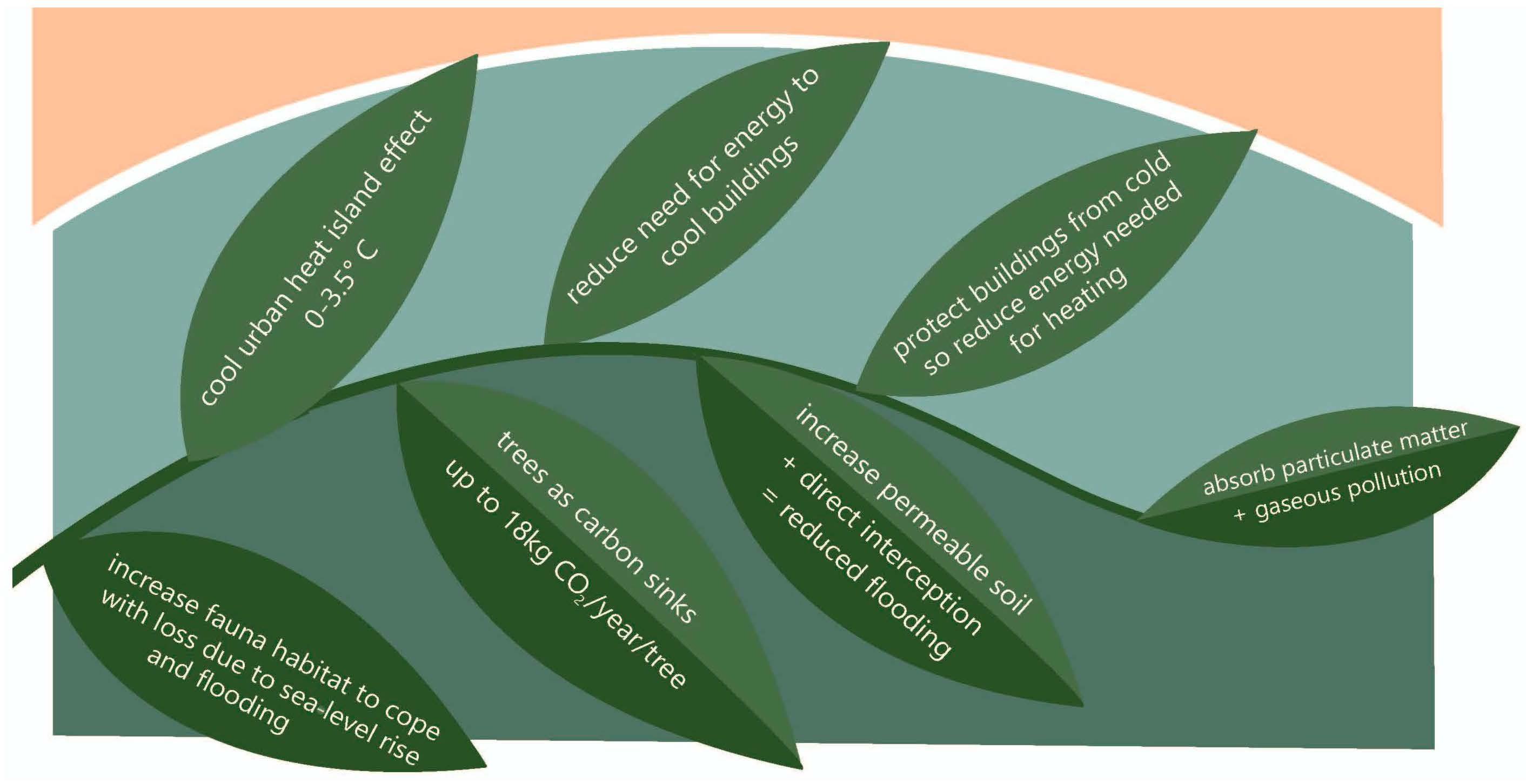
Abstract: Climate change has led to urgent calls for environmental action and justice, which is likely to include increased urban vegetation. The benefits of this planting could go beyond ecological and climate benefits to contribute to decolonisation and environmental and spatial justice and build on the well-documented links between ecological and human wellbeing. In Aotearoa New Zealand, past and ongoing injustices resulting from colonisation have disconnected Māori (the Indigenous people) from their land. Māori see themselves reflected in the landscape and te taiao (the natural world). The process of colonisation has mostly erased natural heritage, intrinsic to Māori identity, from urban areas. Many plants in urban areas represent colonial identity rather than this natural heritage, and many of the native plants that have been planted originate from other parts of the country. This research seeks to determine the benefits of prioritising plants that naturally occurred in an area in the past, termed here ‘plants of place’, in public places. In settler colonial countries, where it is an accepted practice to acknowledge built and predominantly colonial heritage, making pre-colonial natural heritage visible can have many co-benefits. It has the potential to contribute to climate change mitigation and adaptation, decolonisation efforts, spatial justice and environmental justice. Celebrating natural heritage and planting ‘plants of place’ can contribute in some part to righting past injustices and preparing for a changing future.
show lessMaria Rodgers
PhD Candidate Te Herenga Waka Victoria University of Wellington
Wellington School of Architecture.
Maria is teaching fellow in landscape architecture at Te Herenga Waka – Victoria University of Wellington. Her research examines the benefits of prioritising plants that naturally occurred in an area in the past in urban public places in Aotearoa New Zealand. She is particularly interested in the significance of plants for Māori and other Indigenous Peoples, planting design, natural heritage, urban design and cultural landscapes. She continues to teach studio and lecture courses in the landscape programme at Te Herenga Waka – Victoria University of Wellington.
show morePublications
- Rodgers, M., Mercier, O. R., Kiddle, R., & Pedersen Zari, M. (2023). Plants of place: justice through (re) planting Aotearoa New Zealand’s urban natural heritage. Architecture_MPS, 25(1). https://doi.org/10.14324/111.444.amps.2023v25i1.001
- Chanse, V., Rodgers, M., Patel, S., & Marques, B. (2022). Island Bay, Greater Wellington Region of Aotearoa-New Zealand. In G. D. Newman & Z. Qiao (Eds.), Landscape Architecture for Sea Level Rise: Innovative Global Solutions. Routledge.
- Perkins, N., Luke, B., Nan, O. S., Rodgers, M., Kiddle, R., Anaru, K., O’Neill, C., Dey, L., & Fridman, D. (2021). A Recipe for Kai-dness. Counterfutures(12). https://counterfutures.nz/12/Publication%20info.pdf
- Herman, K., & Rodgers, M. (2020). From tactical urbanism action to institutionalised urban planning and educational tool: The evolution of park (ing) day. Land, 9(7), 217. https://doi.org/10.3390/land9070217
Adepeju Tomiwa Victor
PhD Candidate Auckland University of Technology
School of Future Environments.
I am an Architectural Designer and PhD researcher driven by a commitment to designing built environments that restore ecological balance while improving everyday urban life. My work is grounded in regenerative and place-based design approaches that recognise the relationship between people, nature, and the cities they inhabit.
My PhD research focuses on how regenerative architectural principles can be effectively integrated into high-density urban environments to move beyond conventional sustainability toward systems that actively restore ecological health. I am particularly interested in strategies that reposition buildings as contributors to environmental regeneration, social wellbeing, and urban resilience. My key research question is: How can regenerative design strategies be applied to buildings in densely populated cities to enhance ecological health, social resilience, and overall urban liveability?
I bring both academic depth and professional design experience to my work and remain passionate about contributing to research and collaborative initiatives that advance more responsive and life-supporting urban futures.
Jaideep Vyas
PhD Candidate Auckland University of Technology
School of Future Environments
Jaideep Vyas is an architect and town planner with over fifteen years of professional and academic experience spanning architectural practice, community development, and higher education. His PhD research examines community-led and participatory approaches to sustainable housing in Aotearoa New Zealand. He is currently on a break from his doctoral studies and is based in India, where he is engaged in applied research and development practice with the NGO People’s Education and Development Organization (PEDO), working on initiatives related to sustainable livelihoods, Micro-entrepreneurship development, energy, and community-led infrastructure in tribal regions of Rajasthan.
Key Research Questions / Areas of Focus:
-Transnational knowledge exchange between the Global South and Aotearoa New Zealand
-Community-led and participatory housing and settlement models
-Adaptation of Participatory Resource Appraisal (PRA) in urban and Indigenous contexts
-Housing justice, social capital, and urban resilience
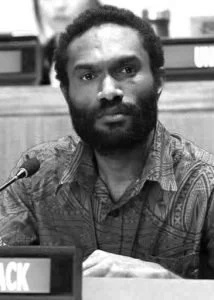
Thesis Working Title: Nature-based Solutions for Climate Adaptation and wellbeing in Vanuatu, Te Herenga Waka Victoria University of Wellington.
Supervisors: Maibritt Pedersen Zari, Luke Kiddle, and Victoria Chanse.
Willy Missack
PhD Candidate Te Herenga Waka Victoria University of Wellington
Wellington School of Architecture.
Willy Missack is working towards his PhD at Te Herenga Waka Victoria University of Wellington. He was the Vanuatu Climate Action Network (VCAN) coordinator and Pacific Climate Change Collaboration Influence Learning (PACCCIL) Project Coordinator at Oxfam, Vanuatu and Vanuatu’s Negotiator on Adaptation and Loss and Damage since COP23. He is engaged in a lot of climate change work in Vanuatu; and was first awarded youth of Vanuatu by Queen Elizabeth II in 2015 with a Queen Young Leaders’ Award for his service to the Vanuatu community. At the regional level, he is serving as the Oceania Regional Coordinator for Conference of Youth (COY16) and the One Young World (OYW) Coordinating Ambassador of the Pacific.
show morePublications:
- 2021, Kiddle, G.L., Bakineti, T., Latai-Niusulu, A., Missack, W., Pedersen Zari, M., Kiddle, R., Chanse, V., Blaschke, P., Loubser, D. ‘Nature-based solutions for urban climate change adaptation and wellbeing: Evidence and opportunities from Kiribati, Samoa, and Vanuatu’. Frontiers in Environmental Science, Special Issue: Nature-based Solutions for Natural Hazards and Climate Change. Vol. 9, No. 723166. Online.
Awards
- NUWAO PhD Scholarship Student 2022 – 2024.

Cosmo Bloor
Master of Architecture Candidate
Auckland University of Technology
Saving Face: Future proofing Tamaki Makaurau through facade adaption
Bio: My name is Cosmo Bloor, I am in my fifth year of study at AUT. I have always been interested in design and creating things as a child and now I can apply these drawing and making skills into a constructive methodology. I like to work tactically with model making, testing out ideas and materials. I also have a love for the vivid scenery that Aotearoa provides us, and I enjoy drawing connections from nature into my work.
Research Description: For my masters thesis I wanted to work in a field of study which could be used in the future within my own practice. I am interested in the future and ways in which architecture can shape and improve our day to day lives, while also creating positive feedback loops within the environment. I am especially interested in shaping the future of our cities through integrating greenery with architectural interventions.

Zara Elizabeth Ely
Master of Architecture Candidate
Auckland University of Technology
Positionality Bio: Kia ora, my name is Zara Elizabeth Ely, and I’m a 5th-year Master of Architecture student at Auckland University of Technology this year. I was born in England, moved to Aotearoa when I was younger, and grew up in Tamaki Makaurau. I feel fortunate to have been brought up in this country with access to our beautiful backyard, and I have always felt a deep sense of peace by the water and in nature. I’ve always been passionate about crafting and creating, whether drawing, painting, sewing or simply a mess; creativity has always played a massive part in my life. Beyond this, I feel strongly about contributing towards something greater than myself, primarily through what I’m interested in: Architecture. Natural progression saw me earn my BAS at Victoria University of Wellington and a gap year, during which I predominantly spent time in sunny Hawkes Bay and some international travel.
Research Description Within my research this year, I wish to explore how Biophilic principles can be integrated into the design of hospitals, specifically geriatric and psychogeriatric wards, to positively influence wellbeing and healing. Our innate connection to nature as humans has long been established; however, its application in the design of our modern world leaves lots to be desired — simultaneous enthusiasm for the relationship between environment and wellbeing led to the exploration of biophilia in Architecture. My aspirations for meaningful and positive change steered me towards Hospital design. A hospital typology specific to geriatric care has been shaped by personal experiences with aged care and its shortcomings.

Jaden Fernandes
Master of Architecture Candidate
Auckland University of Technology
Positionality Bio: I am Jaden Fernandes, I immigrated to Aotearoa in 2016 with my family. I was born and raised in the bustling city of Mumbai. Auckland was a real culture shock for us, and every day has been a new learning experience. Having spent time in two drastically different cities, I want to understand the city better and help create a better environment for us to live in. I am now in my final year as a Master of Architecture (Professional) student, and I am curious about regenerating urban areas and their impact on people. Building a thriving ecosystem and connecting communities. Green infrastructure is lacking in Auckland, especially in the city centre. I aim to build a network of green spaces throughout the city with the help of local communities.

Bonnie Gray
Master of Architecture Candidate
Auckland University of Technology
Positionality Bio: Kia ora, my name is Bonnie, I’m a 5th year Master of Architecture student in 2025. I am of Pākehā and Korean descent, born in Tāmaki Makaurau, Aotearoa. Growing up I had many experiences with the natural environment, whether that be in the garden with my nanna, picking plums and fishing with my poppa, living close to the Waitākere Ranges and spending most weekends in the forest or beaches with my dad, growing a garden with Korean food with my mum, and hearing the stories of the farm she grew up in rural Korea. The natural environment, gardening and food harvesting is prominent in my life, which has heavily influenced my relationship and passion for the natural world and my design practice to engage with it regeneratively. My practice reflects a hope for people to be able to experience similar connections and develop appreciation for the natural world to work with and nurture it, especially in a time of climate change, biodiversity loss, and exploitation of the natural environment.
Research Description: My research investigates the relationship between the built environment and food production, how regenerative architecture practices can be involved in food systems change to foster food sovereignty, literacy and resiliency that support symbiosis between ecology, farmers, and consumers for an improved future where healthy food is cultivated and accessible to all in Aotearoa.

Rita Lai
Master of Architecture Candidate
Auckland University of Technology
Positionality Bio: I am Rita Lai, an Aotearoa-born Taiwanese and a 5th Year Master of Architecture student. Passionate about exploring and observing cities, I am especially drawn to historical buildings, imagining the lives of those who once inhabited them. I also enjoy walking in lush, tranquil settings that foster a deep connection to nature. As I navigate different landscapes, I reflect on how elements interact and shape the world around us, shaping my perspective as a designer.le with nature.
Research Description: My research explores the role of architecture in disaster response and long-term resilience, focusing on regions vulnerable to environmental challenges. I aim to investigate how architectural strategies can minimise damage, accelerate recovery, and strengthen community resilience.

Jenni Pointing
Master of Architecture Candidate
Auckland University of Technology
Positionality Bio: As a child, born in the fertile Taranaki region, some early memories are of lying in a daisy-scattered field,
looking up as clouds bypassed the iridescent sky, cicadas singing loudly, the sun fully immersing my skin.
In my final year of primary school, as part of local Rotary initiative, each student received seeds to plant
and grow their own vegetable garden. I will always remember how I felt, awarded certificate of my effort,
enjoying for the first time succulent radishes, grown by mother nature, harvested by my own hands. In later
years, whenever I would encounter feelings of ecstasy or despair, I would always seek out the most nature encompassed spot within viable reach.
Our environment, on both a conscious and subconscious level, hosts components critical to the way we
behave, act, and feel. As humans we rely on the built environment to provide shelter, landmark orientation,
and to navigate through different life stages. Surroundings speak loudly to us in so many ways – as an
emerging architect, I strive to encapsulate this dialogue into tangible language, translated through the built
form. I am passionate about environmental and social cohesion, alongside tackling the
underrepresentation of minority groups through architecture.
I believe that the consequence of environmentally immersive architecture is symbiotic beauty.
Research Description: This research through design aims to produce an architectural form that is the direct result of
environmental, spatial, and programmatic intention. Focusing on the implementation of architecture as a
tool of physical narration, the substantial building will be of subsidiary importance to its forefront purpose
and context. The aim is to bring into realisation architectural design which responsively varies depending
on programmatic intention, site locality, and the community in which it exists, creating a deeper and more
highly relevant connection between occupants and their associative environment.
An environment holds the ability to provide intimacy, comfort, and support; vital to providing a
contemporary and holistic setting, meeting the individual needs for those who depend upon it. I wish to
explore the relationship between therapy, structure, and one’s environment on a physiological level;
including how architectural functional priorities interact with psychological aspects relating to the
humanisation of space. I intend to use architecture as a tangible form to convey the intangible, by exploring
the architectural narrative of end-of-life care within Aotearoa New Zealand; a complex spiritual, emotional,
and physical journey that affects patients, whānau, and carers.
A palliative care facility conveys the opportunity to explore the need beyond basic programmatic
functionality within architecture; environmental orientation and unique community demands play a crucial
role. With a rapidly increasing aged population, and only eight of the thirty-two Aotearoa hospices existing
within the South Island, this establishes opportunity to align community alongside unique environment,
orientating architecture to remediate future environments. Experience of space within the Ōtepoti Dunedin
geographical context will hold variance compared to other parts of Aotearoa.
A main driver behind this research proposal is the need for contextually responsive architecture, to
implement mutually beneficial environments between the scenario and user.

Thesis Topic: How can we integrate Te Ao Māori and regenerative design tools to enhance the wellbeing of aged residents in healthcare environments?
Supervisors: Sibyl Bloomfield and Maibritt Pedersen Zari
Abstract:
show lessPaige Stables
Studying towards a Master of Architecture (professional), Auckland University of Technology.
Kia Ora, I am a Master of Architecture (Prof) student exploring the intersection of Indigenous knowledge, wellbeing, and the built environment. Growing up in the Waikato, surrounded by the landscapes of Aotearoa, my childhood was surrounded by whenua and people. That connection continues to inform how I approach both research and design. People grounded in whenua.
My work investigates how architecture can act as a framework for cultural regeneration and community-led healthcare spaces in Aotearoa. I am particularly interested in design as a relational practice; One that restores connections between people, whenua, and systems of care.
My approach to research is with both critical rigour and creativity. As someone who is naturally curious and people oriented, I value collaboration, storytelling, and meaningful engagement. I am driven by a desire to design spaces that feel purposeful, empowering, and grounded in care.
show more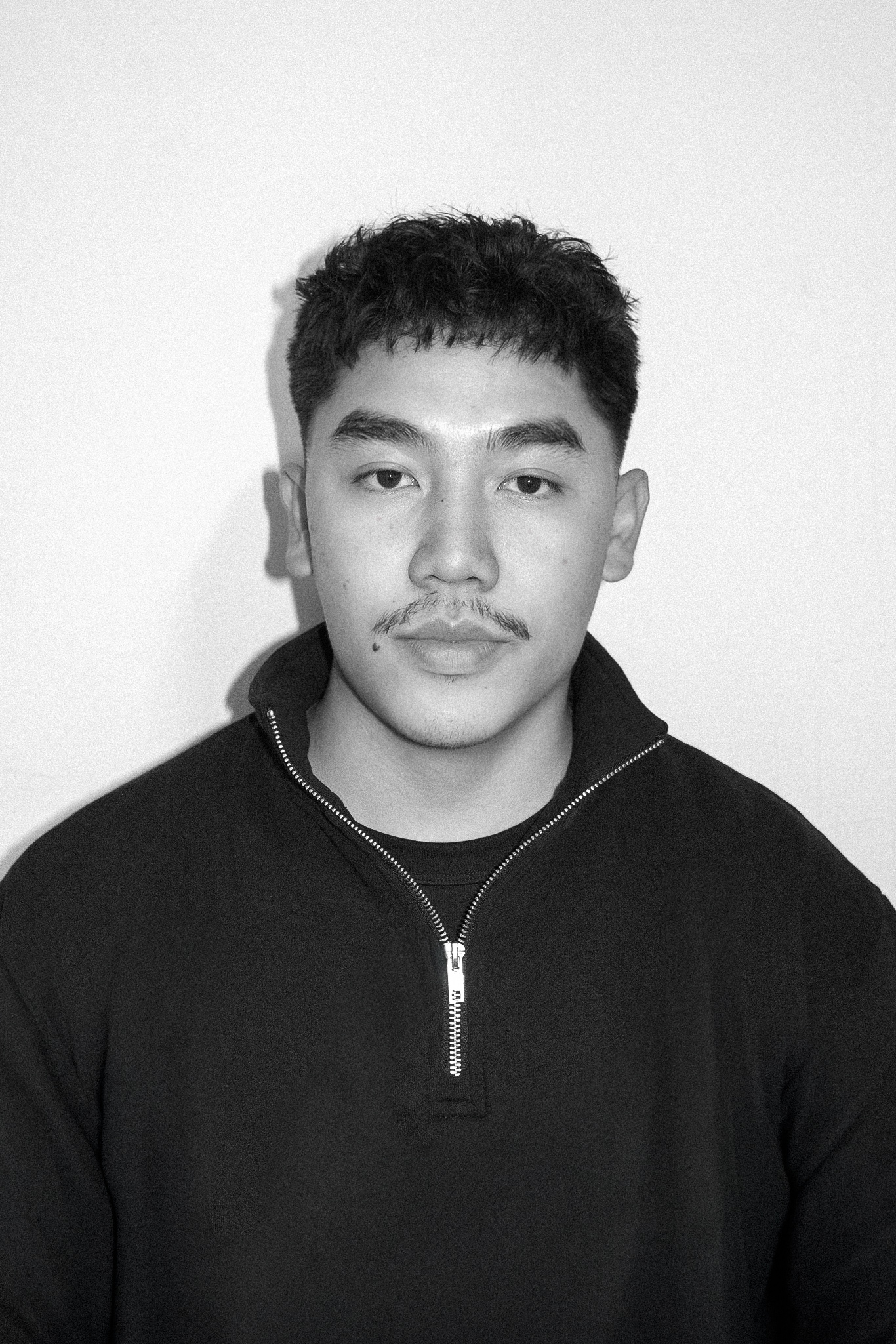
Thesis Topic: How can modular housing frameworks support resilience for communities living in flood-prone coastal environments?
Supervisors: Sibyl Bloomfield and Maibritt Pedersen Zari
Abstract:
show lessIan Chui Jae Pelayo
Studying towards a Master of Architecture (professional), Auckland University of Technology.
Kia Ora and Mabuhay!! , I’m Ian a Master of Architecture (Prof) student interested in how housing can respond to environments shaped by water and change.
I grew up in the Philippines, where flooding was part of everyday life. That experience continues to influence how I approach architecture, not as something fixed, but as something that needs to adapt over time.
My thesis focuses on Sitangkai, a water-based settlement in the Philippines shaped by the lives of the Badjao people. It investigates how their lightweight and adaptable building systems can inform modular housing frameworks that support resilience without displacing existing ways of living.
Within REDLab, my work is grounded in understanding how architecture can work with people and place, rather than imposing a single solution.
show more
Thesis Topic: Te Ara Wai: Revealing Water, A Regenerative Approach to Architecture at the Urban Edge
Supervisors: Maibritt Pedersen Zari, Sibyl Bloomfield, Shereena Sumeran
Abstract:
show lessDarian Chetty
Studying towards a Master of Architecture (professional), Auckland University of Technology.
Research question:
How can architecture reposition water as a visible, performative system within urban environments to address the changing water conditions while increasing the relationship between humans and the natural environment?
Short positionality bio:
I was born in Durban, South Africa, and have lived in Tāmaki Makaurau, Auckland, for most of my life. My history and architectural studies have shaped my interest in the imbalance between urban environments and ecological systems, particularly water. This study investigates design through the lenses of environmental consciousness, ecological restoration, and the belief that architecture may enhance connections between human pursuits and natural systems.
Short research description:
My thesis investigates how architecture might make water visible again in the urban setting. The project at the Avondale Stream, a tributary of the Whau River in Tāmaki Makaurau, explores how regenerative architectural design may adapt to changing water circumstances through collection, filtration, storage, and reuse. The study suggests a community-based strategy that combines ecological remediation and public involvement, repositioning water as both a spatial experience and an active environmental system.
show more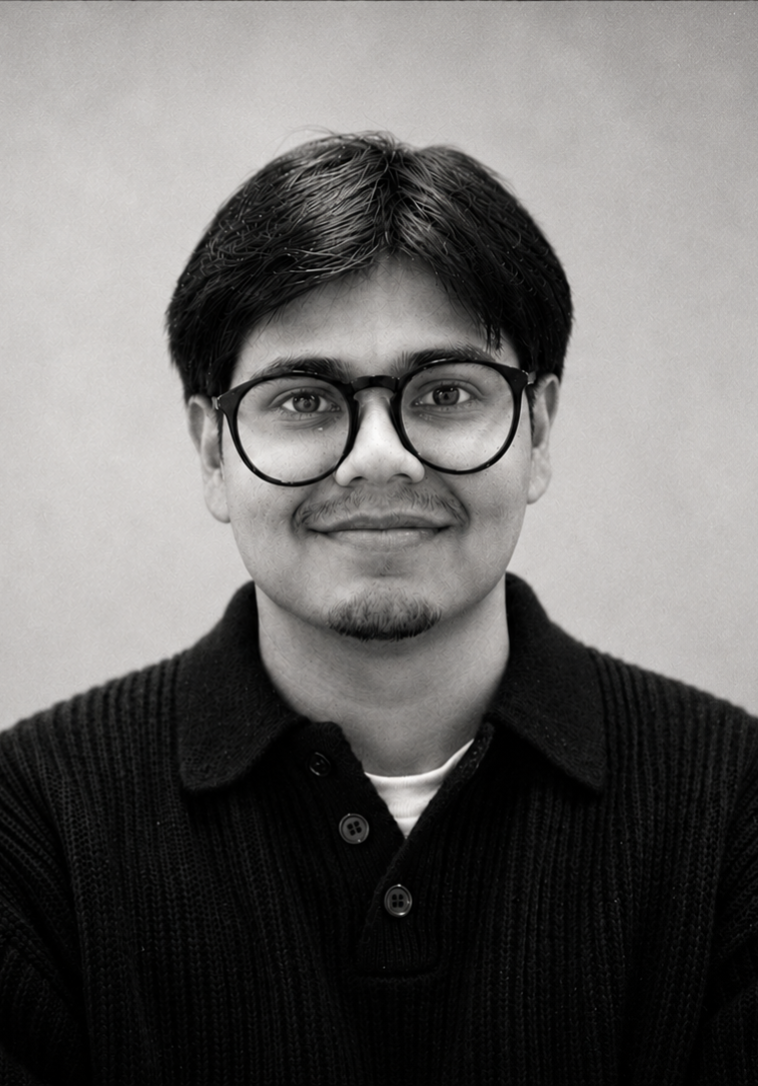
Thesis Topic: Holding Ground: Architecture at the Edge of Sea-level Rise in Fiji
Supervisors: Sibyl Bloomfield and Maibritt Pedersen Zari
Abstract:
show lessRahil Singh
Studying towards a Master of Architecture (professional), Auckland University of Technology.
Kia ora, my name is Rahil Singh. I am a 5th year Master of Architecture student in 2026. I am an Indo-Fijian, born in Fiji and raised in Tāmaki Makaurau, Aotearoa.
My perspective is shaped by lived experience across both Fiji and Aotearoa, alongside family connections to the Rewa River in Nausori. Stories of strong relationships to land and water, alongside recent observations of erosion, mangrove change, and rising sea levels, have informed my understanding of environmental change in the Pacific.
My work explores how architecture can respond to these challenges through regenerative, place-based approaches that support both ecological systems and cultural continuity.
My research investigates how architecture can respond to sea-level rise in Pacific coastal villages through regenerative, place-based strategies. Focusing on Waicoka Village in Fiji, the project centres on the redesign of a community hall as a vessel and key piece of social and cultural infrastructure, reimagined to respond to changing coastal conditions.
The research explores how architectural interventions can work with coastal and river systems to stabilise land, support mangrove regeneration, and enable long-term habitation. Rather than prioritising retreat or hard defences, it positions architecture as a facilitator of ecological recovery and cultural continuity, grounded in Vanua as a cultural framework, supporting communities to remain connected to their land, identity, and ways of living.
show more
Thesis Topic: Ecological Regeneration and Community Amenity: Rethinking Development at Marlowe Bolton, Blockhouse Bay
Supervisors: Maibritt Pedersen Zari and Shereena Sumeran
Abstract:
show lessWeikun Yan
Studying towards a Master of Architecture (professional), Auckland University of Technology.
Kia ora, I am a Master of Architecture student and architectural designer based in Aotearoa New Zealand. My experience in residential design and development feasibility has shown me how ecological value and community amenity are often neglected in development. This has shaped my interest in connecting architectural research with real-life design scenarios.
My thesis explores the Marlowe Bolton site in Blockhouse Bay through ecological design principles. It investigates how landscape, planting, stormwater design, open space, and community facilities can create meaningful amenity. The project sees landscape as a way to bring people together, support ecological resilience, and strengthen community wellbeing.
show more